Reducing Power Flickers
Florida Power & Light Company (FPL) is committed to delivering customers reliable electricity during good weather and bad - that includes further minimizing brief outages and enhancing the resilience of the electric grid. That's why FPL continues to find ways to reduce power "flickers" (outages lasting less than 60 seconds) and their impact on our customers. We apologize if you’ve experienced a problem with your electric service due to power flickers. And we want you to know we’re working hard on our commitment to reduce them.
See below for more information.
Why they occur
Flickers may occur at any time – even on a sunny day – and can be caused by a number of factors, including:
- Lightning strikes
- Damaged electrical equipment
- Vegetation – tree branches, palm fronds or other debris – making contact with power lines
- Animals interfering with electrical equipment
- Salt spray affecting FPL equipment in coastal areas
What happens
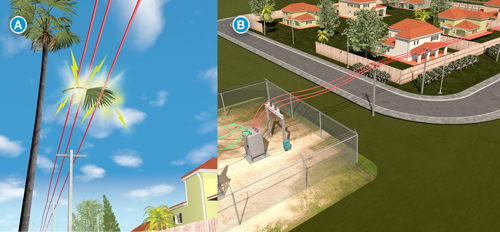
Let's look at one example using the illustration below. One of the most common causes of power flickers is when a tree branch or palm frond is blown into overhead power lines. When the branch makes contact with our lines (A), the system detects the interference and shuts off electricity to that section of the line for a brief period – usually a few seconds (B). The tree branch or palm frond typically falls to the ground, allowing service to be restored quickly.
This process allows the system to determine if there is a break in the line or other electrical difficulty. Briefly shutting off power and isolating the problem area helps prevent damage to the electric system, which could result in a longer outage and affect many more customers.
For example, a flicker on your local power line could affect electric service for you and 200 of your neighbors. Without this brief interruption, the outage could last several hours, spread to other power lines and affect service for thousands of customers.
Others may also be affected
In addition to affecting customers served directly by the affected power line, other customers in the area who receive electric service from adjacent lines may also experience a flicker. Interference on the line, such as a fallen tree branch, often produces a brief drop in electricity – called a “voltage sag” – on adjacent power lines that affects customers served by those wires.
Conversely, a lightning strike could cause a power “surge” – a brief, but noticeable increase in electricity in your home or business that may cause a flicker.
How flickers affect you
You may notice the lights flicker or experience a brief outage lasting several seconds. There also could be a series of flickers over a period of a few minutes. Although these outages are brief, we understand how frustrating they can be for you. Your appliances and electronic devices may shut off and need to be rese
Power flickers can even affect your service if you receive electricity from an underground power line. Underground wires ultimately connect with overhead lines and equipment located elsewhere on the power grid, away from your immediate area. Animals and reptiles also sometimes interfere with underground power cables.
What we’re doing about it
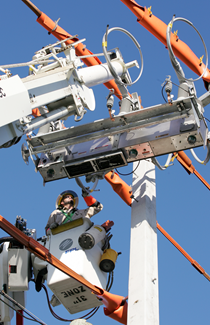
FPL is further researching the causes of power flickers to determine their full impact on customers. More importantly, we're identifying and taking steps to reduce their number.
Smart grid technology - including smart meters - are helping us better understand what our customers experience when flickers occur and help us avoid them all together. FPL's smart grid includes about six million smart meters and more than 240,000 other intelligent devices that help us know when interruptions occur. Before, we could only measure the number of homes and businesses affected directly by the brief outage on their local power line. Today, thanks to smart grid technology, we're able to gauge the outage's impact more accurately on customers in nearby areas whose electric service is affected indirectly - primarily due to a voltage sag or power surge. FPL is working aggressively on several fronts to reduce the frequency of flickers, including:
- Targeting power lines that experience the highest number of flickers for improvements
- Analyzing all technology options to prevent the initial flicker on a power line, and reduce its impact on adjacent lines
- Clearing vegetation from tens of thousands of miles of lines annually
- Inspecting 100% of our poles per inspection cycle
What you can do
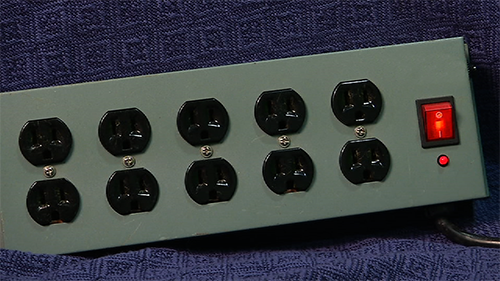
As we focus on our program to reduce flickers, you can take steps to minimize their effect on your home or business. Devices such as surge protectors can help maintain the flow of electricity and prevent possible damage to your appliances and equipment. Surge protectors act like electrical sponges, absorbing excess energy and preventing most of it from reaching your electronic devices.
Frequently asked questions
At FPL, we understand how frustrating power outages, or flickers, can be – and we’re committed to reducing them and their impact on you. Here are the most common questions we receive from our customers.
- What causes power flickers?
There are several factors that can trigger power flickers: lightning, damaged electrical equipment, and objects making contact with power lines, including tree branches, palm fronds and vegetation – even animals. In coastal areas, salt spray from the ocean can affect FPL equipment and cause flickers at your home or business. - Why do they occur in good weather – even on a sunny day?
While power flickers are more common during stormy or windy conditions, they can occur at any time and in any weather. The causes of flickers – animals and vegetation making contact with power lines, lightning and other factors – never take a rest. - Why are homes and businesses served by an underground power line affected by flickers?
Even if you receive electric service from underground power lines, you may be affected by brief outages because the underground wires ultimately connect with overhead lines and equipment – including power substations – that may be located away from your neighborhood. In addition, animals and reptiles sometimes interfere with our underground power cables, causing flickers or longer outages. - What is a voltage fluctuation?
A voltage fluctuation is a dip or spike in the flow of electricity to your home. The state of Florida requires that utilities normally operate within a range of plus- or minus six volts (114 - 126) from standard voltage (120). Fluctuations of more than six volts may cause your lights to dim or brighten. - Is the difference between flickering lights and fluctuating lights?
Lights flicker when the power in your home abruptly turns off but comes back on within seconds. Fluctuations cause your lights to dim or get brighter than usual. - What is a power quality disturbance?
A power quality disturbance is any change in the electricity reaching your home that interferes with normal operation of electrical equipment. Unprotected computers and other sensitive electronic equipment are susceptible to damage from power quality disturbances. - Why is my power out while my neighbor has power?
In many instances, a single street is served by two different main power lines and even different substations. Your neighbor’s home may be served by a power line or substation that has not been affected while the power line or substation serving your home is damaged. Additional reasons your power can be out while other houses on your street have power include:- Fuses or circuit breakers in your home may be tripped
- Tree limbs may have fallen on the line serving your home
- Fuses on the transformer that serves your home may have blown or become damaged
- The primary line feeding the transformer serving your home may be damaged
- Why do I only have electricity in one part of my house?
Causes of a partial power outage include:- A tripped circuit breaker
- A blown fuse
- A broken connector or wire at one of the service leads to your house
- Shouldn't I expect FPL to provide me with interruption-proof power?
FPL understands that any power disturbance is an inconvenience. That’s why we continually invest in strengthening our infrastructure, use smart technology to prevent outages, and proactively clear vegetation from power lines. Despite our best efforts, no utility can ever be completely interruption-proof. Many forces can cause an outage, a flicker or changes in voltage. If you experience an outage or recurring power problems, call FPL at 1-800-4OUTAGE (1-800-468-8243) or report your outage online. - Why do these brief outages seem to occur frequently in some neighborhoods?
Power flickers can be caused by a number of factors (see above). If you are experiencing flickers or longer outages, please contact us at 1-800-4OUTAGE (1-800-468-8243) and we’ll work to improve your service. - Can power flickers damage home appliances or other electronic devices?
Any appliance or device that plugs into an electrical outlet can be affected by a disturbance in the flow of electricity into your home or business. There are several steps you can take to prevent problems when a flicker occurs. - What is FPL doing to prevent these brief power outages?
If you've experienced a problem with power flickers, we apologize - and want you to know we're working to reduce both their frequency and impact. Smart grid technology - including smart meters - are helping us better understand what our customers experience when flickers occur and help us avoid them all together. FPL's smart grid includes about six million smart meters and more than 217,000 other intelligent devices that help us know when interruptions occur. Before, we could only measure the number of homes and businesses affected directly by the brief outage on their local power line. Today, thanks to smart grid technology, we're able to gauge the outage's impact more accurately on customers in nearby areas whose electric service is affected indirectly - primarily due to a voltage sag or power surge. - Is there anything customers can do to protect their electronic devices?
Yes. Devices such as surge protectors can help maintain the flow of electricity and prevent possible damage to your appliances and equipment. - Where should customers call to report power flickers?
You can report a power outage – whether it lasts a few seconds or longer – by contacting us at 1-800-4OUTAGE(1-800-468-8243) or reporting the outage online.