Keep your energy expenses predictable
FPL Budget Billing® helps make your business’ monthly electric bills more predictable by spreading energy costs across the year. Instead of large seasonal spikes, you’ll pay a more consistent amount each month — making it easier to plan, budget and manage operating expenses with greater confidence.
Budget Billing is not designed to help you save on energy costs, and your total annual energy costs do not change. The difference is when you pay for your energy use. By smoothing out seasonal highs and lows over time, Budget Billing helps turn your electric bill into a steadier, more manageable monthly expense — all year long.
See if you qualify

How FPL Budget Billing works:
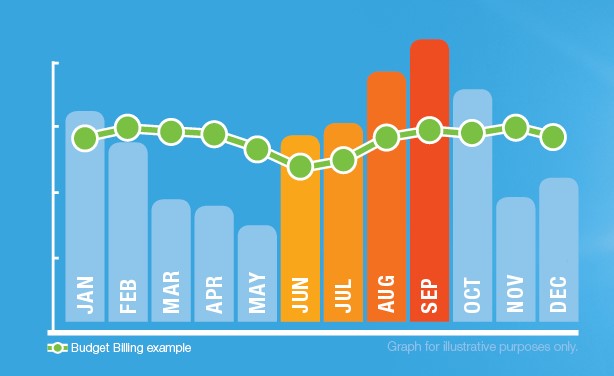
1. FPL Budget Billing uses 12 months of historical energy use from your business to determine a rolling average. This allows us to evenly distribute the cost throughout the year, ensuring you pay about the same each month.
2. Your monthly bill statement will show the difference between your actual electric charges and your monthly “Budget Bill” amount – this will help you keep an eye on your energy usage so you can remain in control. While this program does not save you money, it’s a great way to manage what you pay every month.
3. On your monthly statement, you will see a deferred balance, which is the difference between the bill for your actual energy usage and your Budget Bill. This balance is adjusted each month and gradually applied to future bills. This is why your Budget Billing amount adjusts slightly over time while remaining predictable. This balance also reflects what will be added to or subtracted from your final bill, should you decide to stop using the program.
Note: Your account must have a zero balance before Budget Billing can begin.
Additional Information
Which billing option is better for me?
Regular Billing may be a better fit if you prefer your bill to reflect your actual energy use each month.
Budget Billing may be a better fit if you prefer more predictable monthly payments and fewer seasonal bill swings.
With either option, you still pay for the energy you use over time. Budget Billing changes when you pay, not how much energy costs overall.
How is FPL Budget Billing calculated?
We review 12 months of recent energy usage at your business and calculate an average monthly amount.
Each month, your newest month of usage is added and your oldest month is removed, creating a rolling 12-month average. Your Budget Billing amount adjusts slightly over time as your energy use changes.
Each month, we compare your actual electric charges to your Budget Billing amount. The difference is tracked as a deferred balance and applied gradually to future bills.
If you leave the program, any remaining deferred balance is settled — added to or credited on — your next bill.
What will my bill show?
When you enroll in FPL Budget Billing, your monthly statement will show three amounts:
- Actual electric charges — what you would pay under Regular Billing.
- FPL Budget Billing amount — the amount due as a Budget Billing customer.
- Deferred balance — the cumulative difference between your actual electric charges and your Budget Billing amount.
There is no annual “true-up” period unless your account is closed, you leave the program or Budget Billing is discontinued. This includes if it’s due to a past-due bill. You will be able to re-enroll after 12 months.
What is a Deferred Balance?
A deferred balance is the difference between your actual electric charges and your Budget Billing amount.
If your actual electric charges are higher than your Budget Billing amount, the difference is added to your deferred balance. If your actual electric charges are lower, the difference is subtracted from it.
This balance is spread over time instead of charging everything in a single month.
What if I haven’t been at my business premise for at least 12 months?
- For commercial accounts, at least 12 months of billing history at the premise is required to be eligible for Budget Billing.
- Once you’ve been at the location for 12 months, you’ll be able to enroll in Budget Billing.
What happens if I move?
If you move to a new service location, your Budget Billing (BB) plan will not transfer to the new account. Here’s what to expect:
- When your current account is finalized, any remaining deferred balance from Budget Billing will be applied to your final bill—this could result in either a credit or a charge, depending on the balance.
- For commercial accounts, at least 12 months of billing history at the new premises are required before becoming eligible for Budget Billing again.
- Once you’ve been at the new location for 12 months, you’ll be able to re-enroll in Budget Billing at that time.
Is FPL Budget Billing a savings program?
No. Budget Billing does not reduce your total energy costs. You still pay for the energy you use. Budget Billing changes when you pay, not how much you pay overall.
Why isn’t my Budget Billing amount the same every month?
Budget Billing is designed to make bills more predictable, not fixed.
Each month, we review your most recent usage through a rolling 12-month average. As your usage changes over time, your Budget Billing amount adjusts slightly to stay aligned with your actual energy use.
Why is my Budget Billing amount sometimes higher than my actual bill?
Budget Billing is based on a rolling average of your energy use, so your Budget Billing amount may be higher than your actual charges in some months and lower in others.
When your actual charges are lower than your Budget Billing amount, the difference reduces your deferred balance and helps offset higher-use months later in the year.
What happens if I leave Budget Billing?
Your account returns to Regular Billing with your next bill. Any remaining deferred balance will be added to or credited on your next bill. You may re-enroll after 12 months.
What are the FPL Budget Billing program terms and conditions?
Program terms and conditions can be found here.
Ways to Pay Your Bill
Authorized Walk-In Payment Locations
Ways to Receive Your Bill
Ways to Manage Your Bill
Did you know?
You can combine FPL Budget Billing with our other billing options, including FPL eBill® and FPL Automatic Bill Pay®.